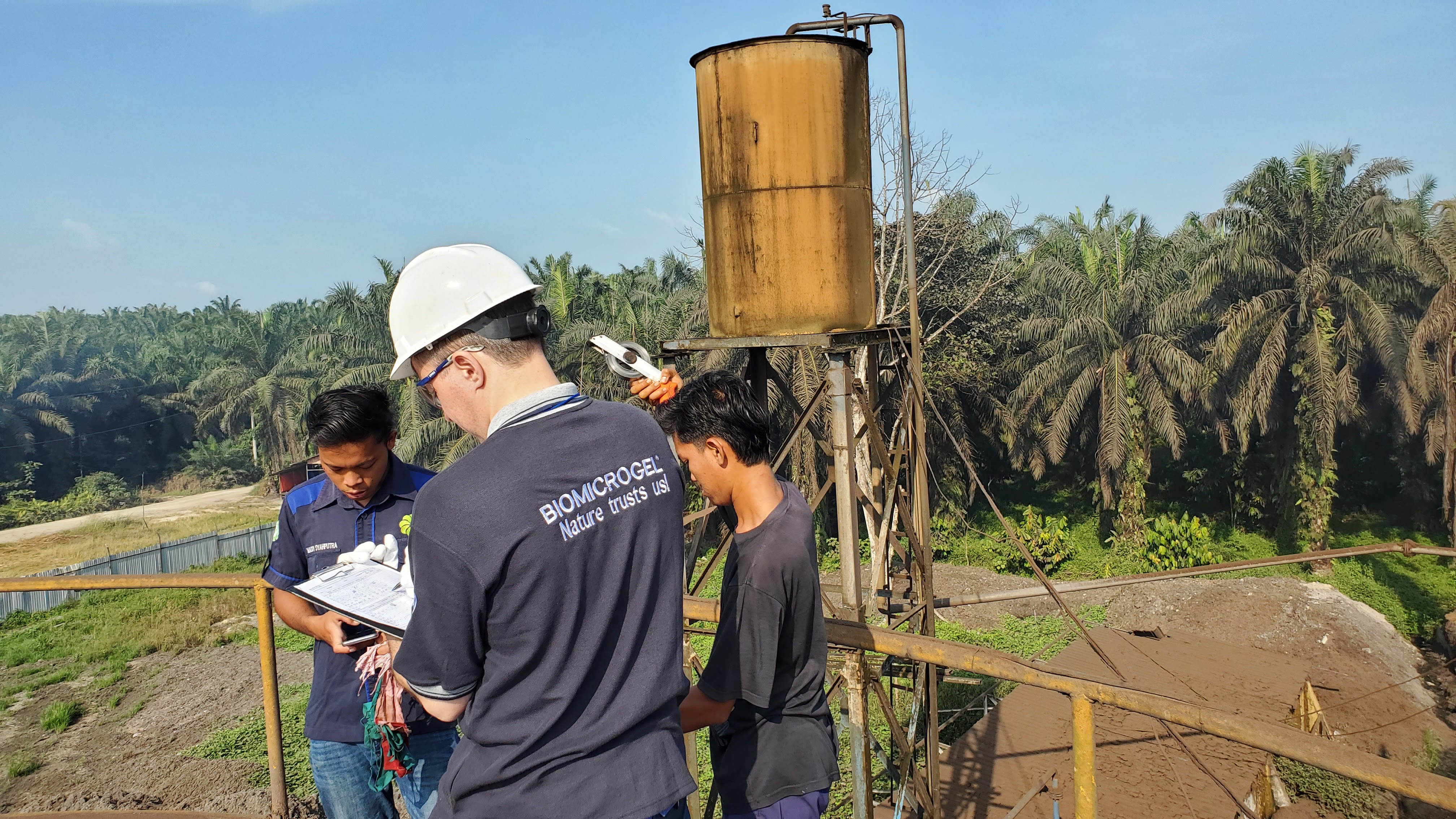


What are biopolymers and how do they differ from synthetic polymers?
Biopolymers (full name - biodegradable polymers) are polymers of natural origin. Otherwise they can be called natural polymers. They are a part of living organisms: for example, in humans they are molecules of proteins and DNA, in trees - cellulose. In addition to natural polymers, there are polymers of synthetic origin, which are obtained from the products of chemical processing of oil and gas.

Cellulose is found in wood and tree needles, so it is the most abundant biopolymer on Earth
Why biopolymers are greener than synthetic polymers
-
Biodegradable polymers are completely degradable and harmless to the environment, synthetic polymers are practically not. They will not decompose in nature before 100 years, so they need to be recycled. To compare: plastic made of biopolymers is already decomposed by 90% in 180 days by microorganisms - bacteria or fungi.
-
Biopolymers are made from 100% renewable raw materials, while synthetics are made from hydrocarbons. Raw materials for most synthetic polymers are natural or associated gas and petrochemical products. These are non-renewable resources and their volume is limited. Biologically degradable polymers are derived from biomass, which nature constantly produces: alginates from algae, cellulose from corn, starch from potatoes and so on.
There is more biomass on the planet than hydrocarbons. Its volume is about 5000 billion tons, and the volume of reserves of oil, gas and coal is 1.8-2 billion tons, or 1% of the volume of biomass.
Moreover, if biomass is renewable, "with current production levels in Russia, oil reserves will last 59 years and gas reserves will last 103 years," says Alexander Kozlov, head of the Ministry of Natural Resources and Environment.
Why biopolymers in water treatment are profitable
So far, their share of the polymer market is only 1%, because they are more expensive than synthetic polymers and expensive to implement. The reagents for water treatment produced by BioMicroGels are the rare case when using biodegradable polymers is not only environmentally friendly but also profitable.
Biopolymers have become more affordable
Typically, natural raw materials are more expensive than petrochemical products. In order to make biopolymers more accessible, the experts of BioMicroGels selected the most common and accessible sources of natural raw materials and developed a technology to produce biodegradable polymers based on them. Pectin was obtained from sugar beet pulp, apple cake and sunflower baskets, cellulose - from recycled wood products. The result is affordable and environmentally friendly reagents for water treatment - Biomicrogels®.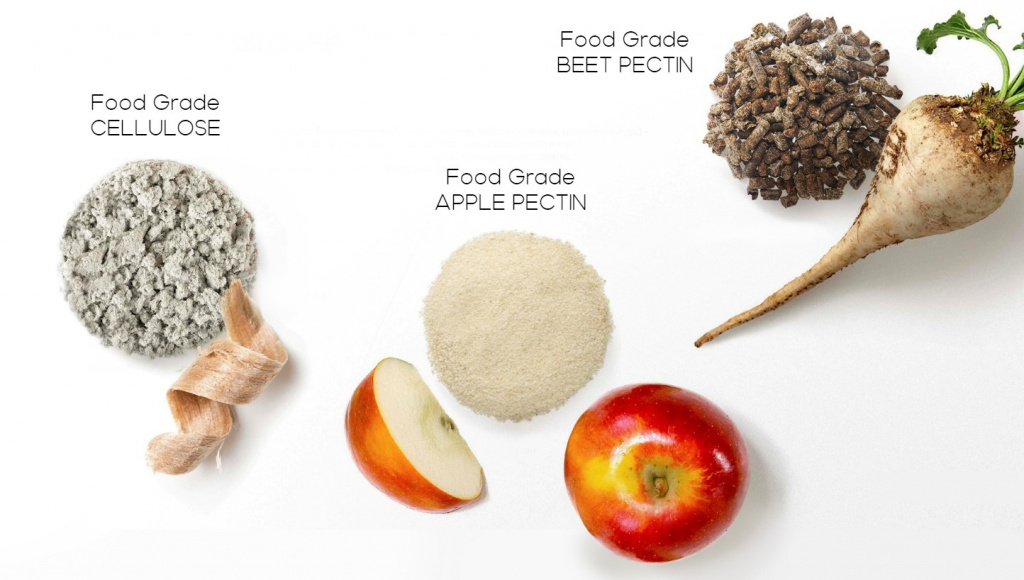
BioMicroGels uses biopolymers - cellulose and pectin - in the production of reagents for water treatment
There are plenty of such raw materials in Russia, and the price for them is not high. But even if production is located in other countries, it would also be easy to find analogues. For example, pectin is also found in pumpkin pulp and citrus pulp.Saving on water purification
Reagents based on synthetic polymers can contaminate treated water again. Biomicrogels® do not affect the chemical composition of the water, so it does not need to be purified from reagent residues.
Import substitution of synthetic analogues
Biomicrogels® are as effective as imported reagents based on synthetic polymers.
Ability to predict purchase costs
Uncertainty of supply, rising oil and gas prices will trigger price spikes or shortages of synthetic polymer reagents. Apple cakes or sugar beet pulp will not rise in price or run out. In the end, they can easily be replaced by similarly cheap bio-materials.
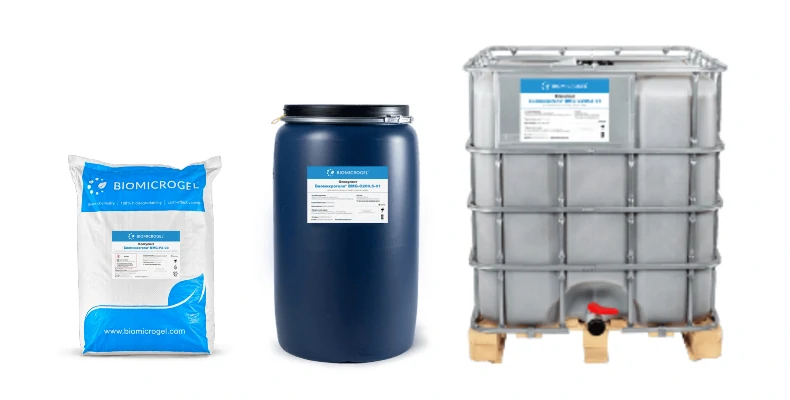
Examples of reagents Biomicrogels® based on biopolymers: sorbent, flocculant, coagulant
Conclusion
Using products made of biopolymers means protecting nature. They are as effective as synthetic ones, only they do not harm nature, do not depend on oil and gas. The only disadvantage is that in most cases they are more expensive than synthetic ones. That is why so far the share of biopolymers like Biomicrogels® is 1% or 2.62 million tons. However, biodegradable polymers have great market potential - by 2028 the volume of global capacity for their production will grow by 19% or up to 3.13 million tons.
and reduce losses without major capital investments
 calculator to estimate the potential economic benefits of using Biopolymer technologies products. This article will help you understand the parameters we use for calculating benefits and their impact on the final results."/>