


How sorbents work
Sorbent compounds are divided by the principle of action into ionics, absorbents and adsorbents. Absorbents absorb other substances with their entire mass - they mix with them and form a solution. Adsorbents collect the substance on their surface without mixing with it.
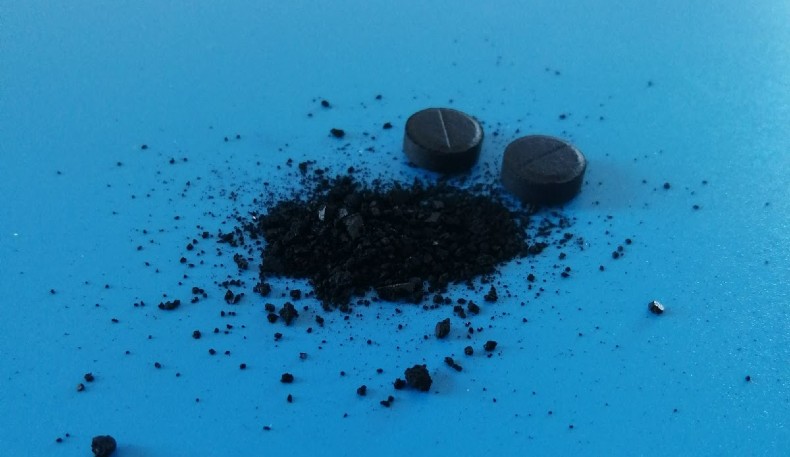
Activated carbon is an adsorbent that is used to improve the odor of drinking water and reduce its oxidation
Adsorbents are divided into hydrophilic and hydrophobic. Hydrophilic absorbs water, hydrophobic does not, so they are used to collect contaminants in water: oil, oil, grease. Hydrophilic sorbents are used to remove excess moisture from the air.
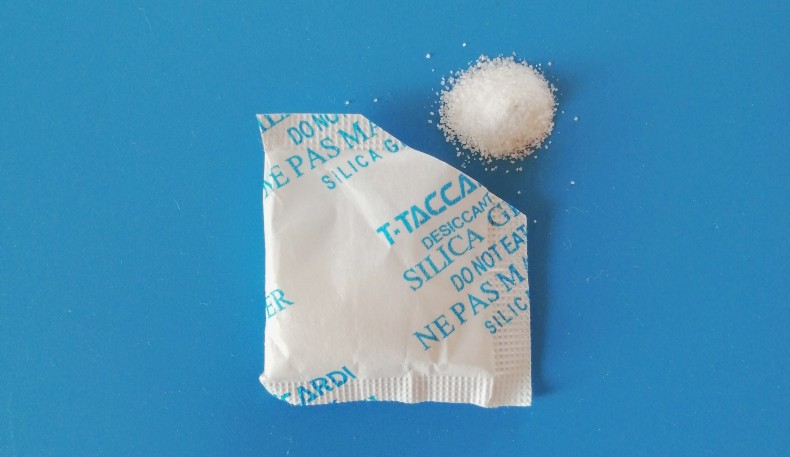
Silica gel refers to hydrophilic sorbents. Manufacturers of goods put it in the package so that the air inside is not humid
Unlike absorbents and adsorbents, ion exchangers work on a different principle. To bind a substance, they exchange ions with it. According to the type of charge, ion-exchangers are divided into cation-exchangers and anion-exchangers. Anion-exchangers exchange negatively charged particles, cation-exchangers exchange positively charged particles.
Types of sorbents
Sorbent materials are classified by origin and aggregate state.
According to the aggregate state
There are liquid and solid sorbent materials. Solid materials are divided into granular and fibrous. Granular includes not only granules, but also a powder.
Fibrous sorbents look like absorbent cotton, but consist of synthetic polymer fibers. They are used to make filtering elements for water and air purification, booms and oil-absorbing mats for oil spill elimination, used in respirators, gas masks and other PPE.
By origin
Sorbent materials can be synthetic or natural. For example, activated carbon is a natural material from charcoal. Silicon dioxide is a sorbent of synthetic origin - it is obtained by heating silicon to 500 °C.
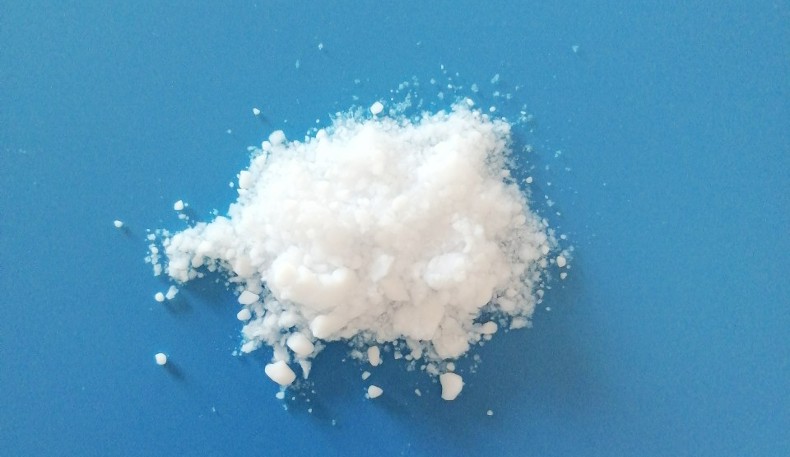
Silicon dioxide is part of the preparations for poisoning
Natural sorbents are divided into organic and mineral. Organic sorbents include straw, sawdust, peat, and mineral sorbents include clay and sand.
Sorbents differ from each other not only by type and origin, but also by two important indicators that must be taken into account when choosing:
-
Oil capacity or sorption capacity — how much oil the sorbent can absorb. For example, the BMG-P1 sorbent has a high sorption capacity - in terms of dry matter 1 gram of sorbent absorbs 50 grams of oil. If it is in the form of a 1% working solution, 1 liter absorbs 1 liter of oil.
-
Buoyancy — the ability to remain on the surface of the reservoir for a long time, not polluting it again.
The advantage of sorbents
Regeneration is the main difference between sorbent compounds and other cleaning agents. There are several common ways to regenerate their properties for reuse:
-
Chemical: treatment with a liquid or gaseous reagent at temperatures up to 100°C. As a result, the sorbent releases the absorbed substance - desorption occurs.
-
Thermal: by heating with steam or gas at a temperature between 100 and 500 °C. This causes the absorbed substance, the sorbate, to condense.
-
Thermic: Electric heating in special furnaces at temperatures from 500 ° C. Sorbate is released and broken down to volatile and condensable products, which are then afterburning.
Water treatment with sorbents
Sorption helps purify water for domestic and industrial purposes. At home it is the preparation of drinking water and cleaning sewage from organics. In industry, it is common to use sorbents in the treatment of industrial and storm water from metals, oils, petroleum products.
The latter includes spills of oil products. It is not only accidents that turn into an environmental disaster, but also small spills that occur during extraction, transportation, processing and storage of petroleum products.
When an oil spill occurs in water, it is important to sorb the oil products as quickly as possible, otherwise some of them will settle to the bottom and poison flora and fauna. After a spill the oil slick becomes thinner, but wider and reaches the shore. Therefore, the soil also has to be cleaned from oil products. The sorbed oil is collected from water and soil with a net.

When oil spills into water bodies, the shoreline also suffers, and sorbents help collect oil both from the water and from the shore
Application of the sorbent for liquidation of emergency oil spills using Biomicrogels® as an example
1. Treat water or shorelines with BMG-P1 in the form of a solution or foam.
2. BMG-P1 creates polymeric films at the interface between the water phase and the oil phase and encapsulates oil products.
3. Microcapsules with pollutants inside them stick together and become a thick gelatinous mass.
4. The gelatinous pollution is removed with a fine mesh net, a mesh shovel, a scoop and other suitable means.
5. The spent sorbent with oil products encapsulated in it is utilized.
BMG-P1 Biomicrogels sorbent in action:
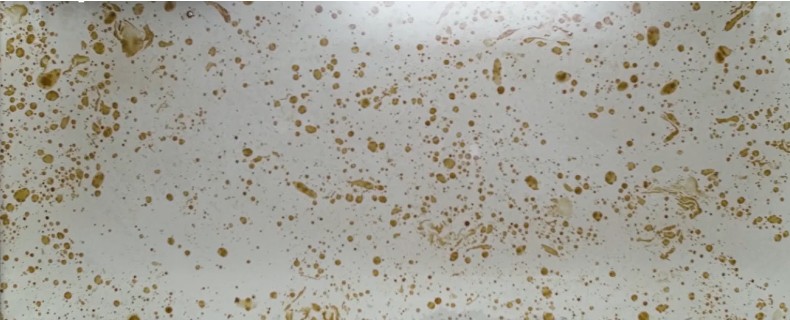
1. Oil was added to the water
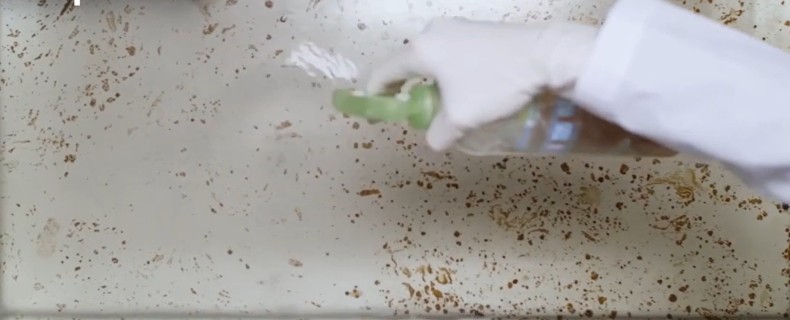
2. Sprayed with Biomicrogels® solution, which encapsulates the oil. The capsules stick together and become jelly-like
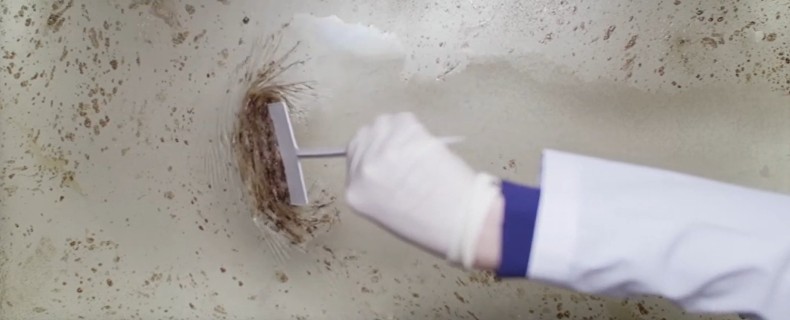
3. Jellied oil is easily separated from the water and can be collected
If one ton of oil gets into the water, in 10 minutes it will form a slick of 1,000-2,000 m2 (10-20 hectares). Oil sorption can reduce the area of an oil slick by up to 50 times - gelled oil forms a 20-40 m2 slick.
In water, gelled oil products do not spread over long distances. It is important because the oil film adheres to fish, waterfowl, birds, and does not let the air necessary for flora and fauna in the water column through.
Gelled oil products do not stick to anything. It means they will not harm inhabitants of the pond and shoreline, they will not settle on rocks, coastal structures and equipment for their collection. In addition, they are non-flammable, non-combustible and safe for the environment because BMG-P1 is based on recycled plant material.
Conclusion
Sorbents differ from each other in type and principle of action, and this greatly expands the scope of their application. For example, fibrous sorbents make non-woven protective fabrics, and liquid sorbents make solutions that treat oil spills from oil spills. The main thing that distinguishes sorbents from other substances for water and air treatment is regeneration, which restores the properties of the sorbent substance and allows its reuse.
and reduce losses without major capital investments
 calculator to estimate the potential economic benefits of using Biopolymer technologies products. This article will help you understand the parameters we use for calculating benefits and their impact on the final results."/>